


The Times of India: Bi-cultural and assimilated South Asians healthier than those with more traditional habits: Dr. Alka Kanaya

The Times of India: Bi-cultural and assimilated South Asians healthier than those with more traditional habits: Dr. Alka Kanaya

Two Indian American physicians who noticed that the incidence of heart disease and type 2 diabetes was higher among their family and friends decided to launch a study called MASALA (Mediators of Atherosclerosis in South Asians Living in America) to get to the bottom of this risk pattern. The Mumbai-born Dr Alka Kanaya, founding principal investigator of the study and Professor of Medicine, Epidemiology and Biostatistics at the University of California San Francisco, shares some insights with Ketaki Desai It's been over a decade since the study launched. What was the motivation behind it?

In the early 2000s when we had almost no data about South Asians in the US because all Asian Americans have been aggregated together, so it was very hard to know whether there were differences in disease prevalence as well as incidence and risk factors. I was also seeing a lot of my family and community members having a lot of disease burden, cardiovascular as well as diabetes. So, I launched a pilot study with very little funding from the National Institutes of Health in 2006 to get some idea of disease prevalence. We designed ‘MASALA’ to be similar in methods and measures to an ongoing study called the Multi-Ethnic Study of Atherosclerosis (MESA) which compares factors across different racial and ethnic groups in the US. Preliminary data showed that diabetes prevalence was much higher among South Asians. In 2010, our team at UCSF along with Dr. Kandula at Northwestern University established a larger cohort of 900 South Asians. Currently, we’re in the third follow-up exam for the original cohort and also the third wave of study recruitment. We are including Bangladeshis and Pakistanis in big numbers to be able to compare across the three groups, because we know from data that comes from other countries that there are differences among these three population groups. We want to see if this is true in the US as well and if it can be explained by different socio-economic, dietary, and behavioural factors. We’re hypothesizing that this is not going to be about genetic differences because our genes are related, but more about sociocultural and environmental factors. 

What have the major findings been thus far from MASALA?

Diabetes prevalence is much higher in South Asians – 26% in MASALA vs 6% in White Americans as per MESA. In people without diabetes, we see higher prevalence of insulin resistance and pancreatic beta cell dysfunction. Both of these abnormalities are leading to this higher rate of diabetes. We’ve also found big differences in body composition. There's a lot more fat in the liver, around the visceral abdominal organs, and in muscles, and very little lean muscle mass compared to the four groups in MESA. Diabetes is the strongest risk factor for hardening of the arteries, and for cardiovascular disease. Lipids and hypertension are important factors too but diabetes and pre-diabetes is driving much of this risk.

What role does acculturation or assimilation play for immigrants?

South Asians are following three main dietary patterns – one is a healthy, mostly vegetarian dietary pattern that's rich in fresh fruits, vegetables, legumes, whole grains, and low-fat dairy foods. One-third of the cohort consumes this. One-third are consuming a South Asian diet that is high in fried foods, high-fat dairy products, and sweets, which is a less healthy but also mostly vegetarian diet. Then the third is a Western diet that has more animal protein and more alcohol. Those three patterns seem to really separate out by acculturation status as well, so as people are more acculturated, they’re either consuming the western diet or that more healthy vegetarian diet pattern. The least acculturated are consuming the more traditional South Asian diet. Acculturation patterns also tell us some really interesting things about cardiovascular risk factors. There are three groups of acculturation –the separation group that has more traditional beliefs and behaviours, the bi-cultural group which has adopted some American beliefs and behaviours and kept some South Asian ones, and the assimilation group is most American. The profiles are healthiest among the bi-cultural group, and the assimilation group. In contrast, the separation group seems to have worse risk factors.

Cardiovascular disease is often associated with red meat, so why is it worse among those with primarily vegetarian diets?

The quality of the vegetarian diets is the issue. Are you eating fresh fruit and vegetables or are they being overcooked or fried so the nutrient value isn’t really there? Our goal is to help inform people about adopting lifestyle changes that retain cultural significance but are healthier.

Why do South Asians have higher death rates from cardiovascular disease compared to other groups?

We’re still trying to understand that. There seem to be some genetic factors that are different, like lipoprotein (a) levels tend to be higher in South Asians. But I think it’s much more about modifiable risk factors, like behaviour, diet, exercise, smoking, stress, and sleep – all things can amplify the genes we may have inherited. But if we change these modifiable risk factors, we can get back to usual risk. There are also structural factors – there are people who don’t have the ability to eat healthy or exercise because of socio-economic factors, where they live, safety, poor air quality, etc. Having access to good quality health care to prevent and manage chronic diseases is another important structural factor.

What can be done when it comes to prevention?

Change starts with you and where you can make a difference is by involving and encouraging the people around you and in your social networks. For example, getting daily exercise, not having dessert every day, and serving healthier options when you are hosting. My parents, who are in their eighties, only serve fresh fruit and nuts at their monthly prayer gatherings now, instead of mithais. The bigger work has to be done on our systems –food, healthcare, taxing things that are not so healthy for you like tobacco, alcohol, sugar sweetened beverages. We know soda taxes haveworked in the US and Mexico. One interesting finding is that older participants in MASALA said the people most influential in making them exerciseand eat healthier foods are their adult children, not their doctor, public health media, or spouse.

Are there differences between the men and women you studied?

In men, 30% had diabetes as compared to only 15% of women. We see this gender difference around the world for diabetes, but it is not such a big difference. What we’re seeing in our follow-up exams though is that the women are catching up and developing diabetes too.
Download PDF

The Positive Impact of Healthy Plant Based Diets

The plant-based diet has been around for over 2000 years, one of the earliest records of vegetarianism was from the Jain population in India in 500 BCE. This is a practice in many cultures and religions now, mostly due to the ethical implications of consuming meat products. Recent studies have shown there are many other environmental and health benefits associated with consuming a plant-based diet.

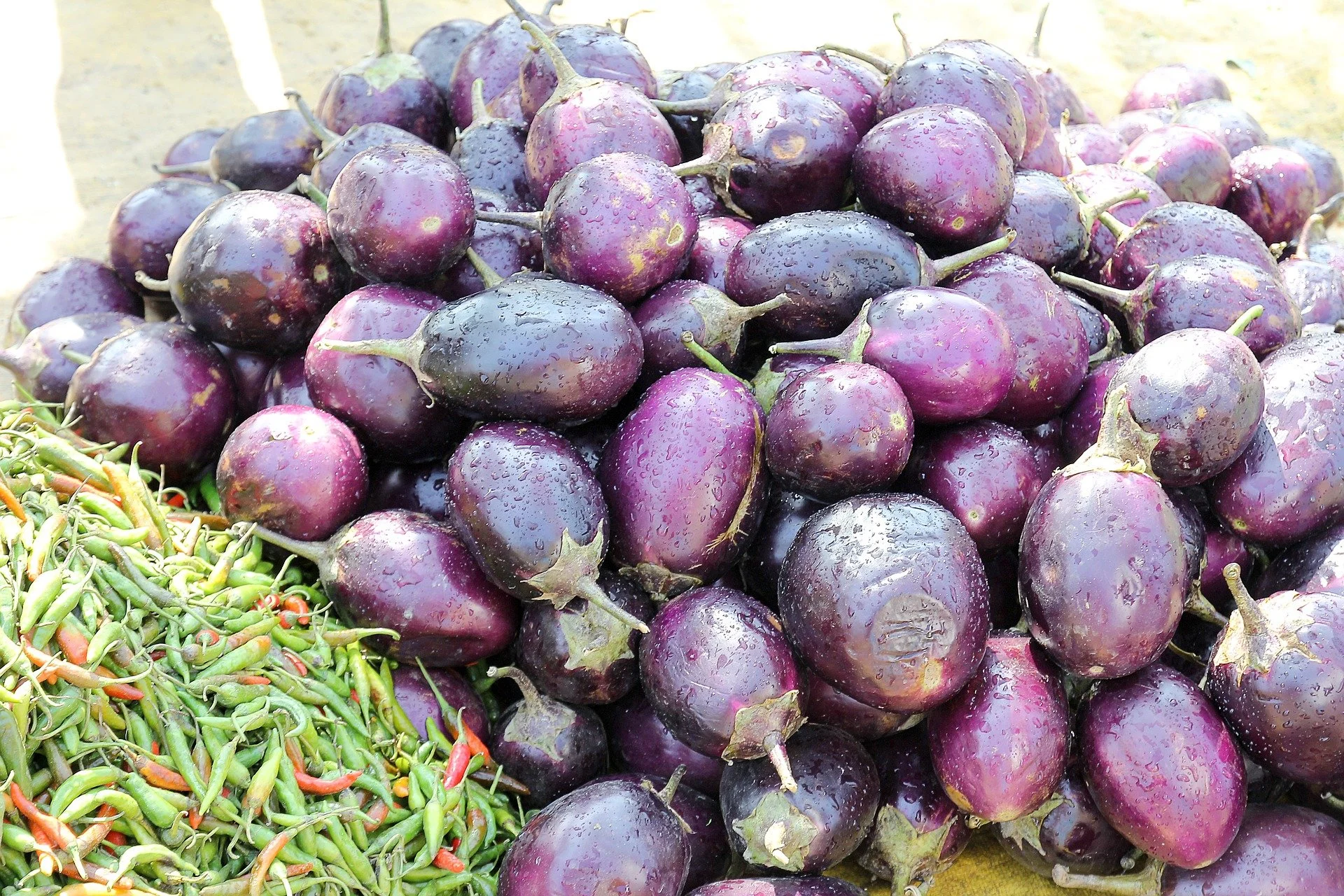
Eggplants to depict South Asian vegetarian diet

Researchers at Harvard recently published an article with our MASALA Study data that determined the impact of both a healthful and an unhealthful plant-based diets on disease risk. They measured the PDI (plant-based diet index), HPDI (healthful plant-based diet index), and UPDI (unhealthful plant based diet index) for each participant and analyzed the effect on fasting glucose levels, insulin sensitivity, low density cholesterol levels, weight, BMI (body mass index), hemoglobin A1C levels, fatty liver, and future risk of developing diabetes. The best results were seen in participants with high HPDI levels. This means people who consume lots of food like fruits, veggies, whole grains, nuts, daal, or beans. Some examples of unhealthy plant foods are fruit juices, refined grains, potatoes, sugar sweetened beverages, and other sweets and desserts. People who ate a healthy, plant-based diets were likely to have lower fasting glucose, less insulin sensitivity, lower cholesterol levels, lower weight, lower BMI, less fatty liver, and lower hemoglobin A1C levels. Moreover, these individuals were less likely to develop diabetes after 5 years of follow-up. These results show that chronic disease risk can be lowered significantly by simply eating a healthy plant-based diet.  

MASALA Featured in Scroll Global

MASALA Featured in Scroll Global

The struggle to understand – and combat – heart disease among South Asian Americans

South Asians are four times more likely to get heart disease than other ethnic groups in the US. We are only starting to understand why.

By Anisha Sircar

In August 2020, a 60-year-old Indian-American walked into a clinic in Chicago complaining of abnormally high cholesterol levels. The doctor urged him to cut red meat from his diet. “But I’m a vegetarian… I don’t eat any red meat,” the puzzled man replied.

“That’s the first piece of advice somebody gives you when you go to the doctor,” says Namratha Kandula, a doctor and researcher at Northwestern University, Illinois. “If you say, ‘I’m a vegetarian,’ doctors don’t even know what to say next,” she said.

The 60-year old man was a participant in a study Kandula is conducting on the prevalence of heart diseases among South Asians. Like him, several participants in her study complain of similar encounters. Indians, Bangladeshis, and Pakistanis in their thirties and forties are given similar advice, and even suffer from heart attacks despite not necessarily eating meat, being overweight, or using tobacco.

“This is a really big issue,” said Kandula, pointing to a mismatch between what South Asian American communities have learnt about cholesterol, diabetes, and heart conditions, and what doctors know and understand.

The crisis

South Asian Americans are four times more at risk of developing heart disease than other American ethnic groups, have a much greater chance of getting a heart attack before age 50, and have the highest prevalence of Type 2 diabetes, a leading cause of heart disease, according to various studies.

South Asians in the United States are also more likely to die from heart disease than any other group, according to a study by the American College of Cardiology. This ethnic group represents approximately 25% of the world’s population – and yet accounts for 60% of the world’s heart disease patients, it says. Though this is a long-standing problem, even now, “nobody really understands what’s going on here,” Kandula said.

While it isn’t fully clear exactly why they are more prone to heart disease than other groups, researchers say a combination of genetics, diet, and socio-cultural factors play key roles.

The ethnicity has a genetic predisposition to developing risk factors associated with cardiovascular diseases. For instance, South Asians are genetically more likely to develop insulin resistance, which can then cause diabetes and metabolic syndrome – important culprits of heart health issues.

South Asians’ carbohydrate-heavy diets, often rich in oils and fats, are also highlighted as another issue: “You’re already predisposed to developing a condition such as diabetes or heart disease, and then you’re eating foods that would make the control of that worse,” said Rita Kaur Kuwahara, an internal medicine physician with expertise in international health and health policy.

When a person eats sugar or carbohydrates, she explained, their body releases insulin to help break it down. But with diabetes or insulin resistance, cells don’t respond to the insulin, and so cannot work as well to bring sugar levels down. “On top of that, if you’re eating foods that require more insulin to process, you’re going to have uncontrolled diabetes or very high sugar levels.”

Also, physiologically, South Asians may not have higher rates of obesity or body mass indexes than other groups, but tend to accumulate fat in the belly area and the abdomen, which is a dangerous type of fat. This causes inflammation in the body, and can lead to high blood pressure, diabetes, and insulin resistance, researchers say. On average, South Asians tend to store more fat in the “wrong places” and have less lean muscle mass than other populations.

Legal push

To address this, Congresswoman Pramila Jayapal introduced a version of the South Asian Heart Health Awareness and Research Act in 2017. The bill, which was reintroduced in 2019 and passed the House of Representatives in September 2020, aims to promote heart health awareness and bring funding to an obscured cause.

When Jayapal saw healthy South Asians suffer from heart attacks, she realised the extent of the problem, said Stephanie Kang, a representative from Jayapal’s office, who works as the Congresswoman’s health policy advisor. “There was rarely a South Asian she’d met that didn’t have a family member who unexpectedly had heart disease, even though they were healthy.”

A lack of funding and resources has continued to plague this issue, which is what led to the vision behind the bill, said Kang.

Collaborative Cohort of Cohorts for COVID-19 Research

Collaborative Cohort of Cohorts for COVID-19 Research

C4R Image.png

The MASALA study is proud to be one of the 14 national cohorts participating in this new nationwide study of more than 50,000 individuals to determine factors that predict the severity and long-term health impacts of COVID-19.

This study will include participants from nearly every U.S. state, with an estimated 24% of the participants who are Black, 20% are Latinx, 5% are Native American,  2% are Asians, and 49% are White.

Participants in MASALA and the other cohorts will be asked to complete a questionnaire in early 2021 and again in mid 2021 to determine their current health, behaviors, and psychosocial impact of the COVID pandemic. We will also ask participants to send us a small sample of blood (dried blood spot) to determine whether they have antibodies to COVID. Those who have had COVID infection, will be asked to share their medical records to determine their illness course and severity. These data will be used to determine the impact of the COVID pandemic on individuals in the community, and what the long-term effects may be of having COVID.

We thank the MASALA study participants for joining this collaboration. South Asians will have representation in this national study and will contribute to the overall understanding of this COVID pandemic.